
OFAC Enforcement and Compliance Insights
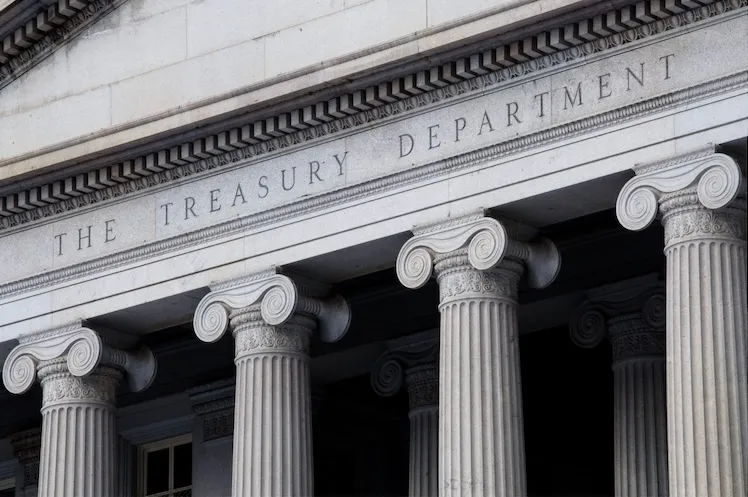
The U.S. Treasury Department’s Office of Foreign Assets Control (OFAC) plays a pivotal role in administering and enforcing economic and trade sanctions to advance U.S. foreign policy and national security objectives. These sanctions target foreign countries, regimes, terrorists, narcotics traffickers, and entities involved in activities related to weapons of mass destruction proliferation among others.
OFAC pursues a range of enforcement actions against countries, entities and individuals violating these sanctions. It is prudent to analyze these actions, identify trends, and understand common violations, penalties, and their implications for compliance.
Over the past few years, OFAC has intensified its enforcement of economic sanctions, reflecting evolving global challenges and the increasing complexity of financial transactions. This period has seen notable shifts in enforcement priorities, significant penalties and expanded regulatory frameworks.
OFAC Enforcement
The number of OFAC enforcement actions fluctuates narrowly between a dozen to two dozen per year, with total penalties ranging from $20 to $40 million. But in 2023 the dollar amount of penalties surged to a total of $1.5 billion. This was largely due to two specific enforcement actions against Binance Holdings, Ltd. and British American Tobacco.
Binance agreed to pay $968.6 million to OFAC for facilitating transactions involving sanctioned individuals and jurisdictions. This was part of a broader $4.3 billion settlement with U.S. authorities addressing violations of the Bank Secrecy Act and the International Emergency Economic Powers Act.1
Meanwhile British American Tobacco faced a $629 million penalty for violations related to North Korea, marking the largest OFAC settlement with a non-financial institution to date, according to the American Bar Association.2
OFAC has also begun to target the cryptocurrency sector, recognizing its potential for sanctions evasion. According to cryptocurrency security firm Solidus Labs, in 2022 the main federal regulators with authority over cryptocurrency – the Securities and Exchange Commission (SEC), the Commodity Futures Trading Commission (CFTC), the Financial Crimes Enforcement Network (FinCEN) and OFAC – announced a combined 58 crypto-related enforcement actions, a 65% increase over 2021.
One of these, Bittrex Inc., agreed to remit $24,280,829.20 to OFAC to settle its potential civil liability for apparent violations of sanctions against Cuba, Ukraine-related, Iran, Sudan and Syria. The U.S. arm then declared bankruptcy, though a foreign-registered sister company continues.
Financial Transaction Scrutiny
While crypto-related actions grab headlines, traditional financial transactions remain under scrutiny, and OFAC enforcement occurs across industries. While financial organizations may be more often in the headlines, OFAC compliance includes “all U.S. persons.”
A couple recent examples are instructive. In 2020, Amazon was penalized $134,523 due to deficiencies in its sanctions screening processes. And in 2022, Airbnb paid $91,172 for processing transactions involving Cuba. In the past, such diverse organizations as Humana, Inc., 3M Company, Johnson & Johnson and the Salvation Army have faced settlements with OFAC.
As for screening for sanctioned entities, they are not all as obvious as ISIS or MS-13. Often, they have innocuous sounding names, such as AWA Engineering Ltd., Advanced Electronics Development Ltd, Global Relief Foundation Inc., H&H Metal Form GmbH, or Smile Properties and Travel.
Trends in OFAC Enforcement
Several trends emerge from the analysis of OFAC’s enforcement actions over the past four years:
Penalties: The average penalty per action rose significantly in 2023, reaching approximately $90.7 million, though this was due to the Binance and British American Tobacco settlements. This compares to $1.0 million in 2021, $2.7 million in 2022 and $4.1 million in 2024. But 2023 suggests a trend toward harsher penalties for egregious violations.
Focus on Cryptocurrency: The cryptocurrency sector has seen increased scrutiny, with multiple high-profile cases in 2022 (e.g., Kraken, Bittrex) and 2023 (e.g., Binance, Poloniex). This reflects the challenges of regulating decentralized financial systems, which can facilitate sanctions evasion.
Global Reach: OFAC’s enforcement extends beyond U.S.-based entities, targeting foreign companies like British American Tobacco and Aiotec GmbH that engage in transactions involving U.S. persons or the U.S. financial system.
Complex Evasion Schemes: Cases like British American Tobacco demonstrate OFAC’s ability to uncover and penalize sophisticated, multi-year conspiracies designed to obscure transactions with sanctioned entities.
British American Tobacco (BAT) was penalized $508.6 million for a conspiracy to export tobacco products to North Korea, involving $251.6 million in payments processed through U.S. financial institutions from 2009 to 2016. The scheme included a joint venture with North Korean entities and sales to the DPRK Embassy in Singapore.
BAT’s management was aware of the violations, and the company used complex remittance processes to obscure North Korea’s involvement. Mitigating factors included no prior OFAC violations in the past five years and cooperation with the investigation. This case highlights the risks for multinational companies engaging in trade with sanctioned countries, even indirectly.
Implications for Compliance
The enforcement actions from 2021 to 2024 emphasize the need for robust compliance programs, particularly for companies with global operations:
- Risk Assessment: Regular assessments are critical to identify exposure to sanctions risks, especially in high-risk jurisdictions.
- Transaction Screening: Effective screening tools are essential to detect and block transactions involving sanctioned entities or jurisdictions.
- Employee Training: Ongoing training ensures staff understand OFAC regulations and compliance obligations.
- Third-Party Due Diligence: Companies must conduct thorough due diligence on intermediaries and partners to prevent indirect violations.
- Proactive Disclosure: Voluntary self-disclosure of potential violations can mitigate penalties, as seen in cases where cooperation was a mitigating factor.
Conclusion
OFAC’s enforcement actions reflect a steadfast commitment to upholding U.S. sanctions policies. The significant penalties in 2023, driven by high-profile cases, signal a trend toward stricter enforcement, and the cryptocurrency sector is not exempt. Financial institutions, fintech companies and multinational corporations especially must prioritize compliance to avoid substantial fines. By implementing robust risk management and compliance programs that include ongoing two-way checking against prohibited entities and persons, businesses can navigate the complex sanctions landscape and mitigate the risk of enforcement actions.
Key Links:
- OFAC Civil Penalties and Enforcement Information
- 2024 Enforcement Information
- 2023 Enforcement Information
- 2022 Enforcement Information
- 2021 Enforcement Information
- U.S. Sanctions Enforcement: 2023 Trends and Lessons Learned
- OFAC and DOJ Sanctions Enforcement in the United States
- OFAC Enforcement Guidelines
- OFAC FAQs on Violations and Penalties
OFAC FAQs:
Click here for OFAC matching FAQs
To learn how VendorInfo automates ongoing dual-direction OFAC Checking for your OFAC Compliance Program, contact us.
1https://www.millerchevalier.com/publication/ofac-year-review-2023?utm_source=chatgpt.com